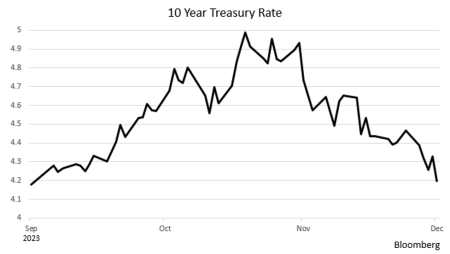







Bonds have been grabbing headlines lately, as rising yields weigh on stocks and trace the path of the Federal Reserve’s aggressive interest rate hikes. But often lost in the conversation is that U.S. Treasuries represent America’s debt, which has been rapidly increasing. At what point do investors have to worry about those federal spending levels themselves?
As Citi Research notes Tuesday, U.S. federal debt relative to gross domestic product has risen almost 20 percentage points since 2019 to nearly 100% of GDP, and looks likely to stay on an upward trajectory. The nonpartisan Congressional Budget Office, or CBO, expects that the deficits are on pace to average almost 6% of GDP over the next decade, up from the average 3.5% in the five years before the Covid-19 pandemic.
The problem is largely political. Unsurprisingly, most politicians don’t want to raise taxes and simultaneously cut services, the combination generally needed to curb debt. The U.S. government narrowly avoided a shutdown this fall, but when such debt ceiling showdowns aren’t looming, Americans and investors are mostly happy to ignore the issue.
That has become harder to do so lately: Fitch Ratings downgraded the U.S.’s sovereign debt rating to AA+ in August. Soon after, the Treasury announced its significant borrowing needs. Add in higher interest rates and a widespread belief that America will avoid a recession—the soft-landing scenario—and you have a recipe for falling Treasury prices and higher yields. Bond yields and prices move inversely.
Yields have moved steadily higher this year, with those on the 10-year Treasury hovering around15-year highs.
That has left investors attuned to any cracks in demand. Nonetheless, as a group of Citi analysts, led by Global Chief Economist Nathan Sheets, opines, things the bond market will likely return to business as usual, with investors around the world happy to snap up Treasuries.
“The most likely outcome is that any discomfort that the markets continue to feel about the U.S. debt trajectory eventually dissipates,” the team wrote Tuesday. “In this case, the core strengths of the U.S. economy give investors the confidence to purchase Treasuries, notwithstanding the ongoing political noise. Similarly, the effects of high debt levels on economic performance are limited.”
Sheets notes that the “U.S. economy continues to possess deep resources and significant strengths.” As the world’s largest, it’s proven resilient in recent years and capable of paying its debts. The dollar’s position as the world’s reserve currency is another arrow in its quiver.
Still, there are other less rosy outcomes, according to Citi. In one, debt levels can continue to rise in a sustainable way while still creating headwinds to economic growth, as Japan has experienced in recent decades. A highly leveraged government would have less flexibility to step in during a crisis, like the pandemic, while also likely spooking the private sector, constraining business spending.
The worst situation would be a true crisis, much like a prolonged version of the 2022 gilt crisis—when yields on U.K. government securities rapidly spiked because of a slate of proposed borrowing-funded tax cuts. That wouldn’t only damage the U.S. government bond market, but the global financial markets at large, given the U.S.’s importance.
Sheets continues to see this as the least likely scenario, however, because of the economy’s strength and the Fed’s likely willingness to step in and defuse the situation.
In the end, it seems there is little to disrupt the global appetite for Treasuries in the long run, especially as investors enjoy juicy yields.
In fact, because the U.S. is so central to the global economy, it benefits from a virtuous cycle: The dollar, seen as a haven, strengthens even in times of U.S. financial stress, as seen during the Great Financial Crisis.
It’s little wonder then, that stock markets have largely shrugged off the question of how much debt is too much for the U.S.
“Ultimately…we see this issue as boiling down to the durability of investor confidence in U.S. equity markets, and we’d expect the U.S. to still have a relative performance edge so long as it maintains its reserve-currency status,” writes Sheets’ colleague, U.S. Equity Strategist Scott Chronert.
So investors around the world don’t have to love the American government’s spending habits. For now, a lack of better options is enough to keep them coming back.
Write to Teresa Rivas at [email protected]
Read the full article here