





Treasury yields broadly rose on Thursday after Federal Reserve Chairman Jerome Powell pointed to the possible need to take more action against inflation and a 30-year government bond auction drew weaker-than-expected demand.
What happened
-
The yield on the 2-year Treasury
BX:TMUBMUSD02Y
rose 8.6 basis points to 5.022% from 4.936% on Wednesday. Thursday’s level is the highest since Oct. 31, based on 3 p.m. Eastern time figures from Dow Jones Market Data. -
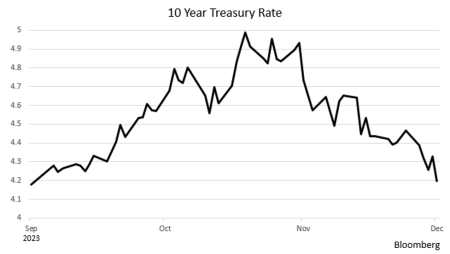
The yield on the 10-year Treasury
BX:TMUBMUSD10Y
jumped 12.3 basis points at 4.629% after factoring in new issue levels. -
The yield on the 30-year Treasury
BX:TMUBMUSD30Y
rose 12.2 basis points to 4.777% from 4.655% late Wednesday. The 30-year rate had been on track for its largest one-day jump since June 13, 2022, but stopped short of the increase need to reach that level by the end of the New York session.
What drove markets
Treasury’s auction of $24 billion in 30-year bonds Thursday afternoon went poorly, undermining investors’ hopes that demand would hold up for government debt. The weaker-than-expected sale triggered an aggressive selloff in the long-dated bond and sent U.S. stocks toward New York session lows.
Meanwhile, Federal Reserve Chairman Jerome Powell gave remarks as part of an International Monetary Fund panel on Thursday, saying that the central bank is wary of “head fakes” from inflation. He also indicated that officials are not yet confident that interest rates are high enough to bring inflation down to 2% over time and won’t hesitate to hike rates again if needed.
Data released earlier on Thursday showed that initial jobless claims dipped to 217,000 last week, remaining at low levels typical for a strong labor market. Economists had expected new claims to total 220,000.
What analysts are saying
“Fed Chair Powell’s remarks at the IMF today were a reminder that the FOMC still has a tightening bias,” said economist Michael Feroli of JPMorgan Chase & Co. “We still believe the Fed is done hiking for this cycle, but today’s speech should serve as notice that their rhetoric must stay hawkish until they’ve seen further improvement in inflation.”
Read the full article here