




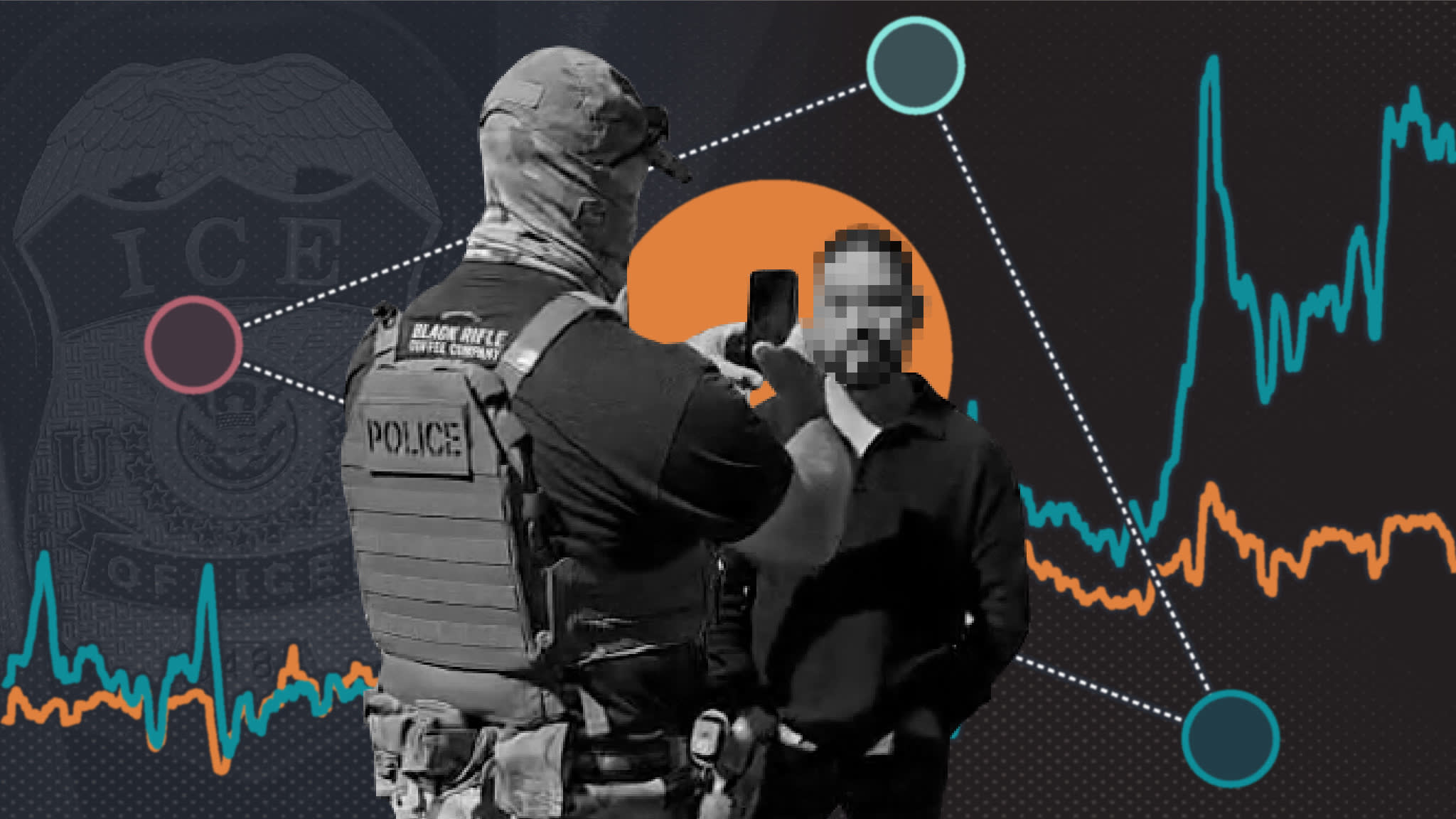
“I’ve seen the apps and I don’t like them,” says a DHS official who left this year. “It’s rife for abuse. I imagine they’re being used in ways they were not intended.”
He highlighted the risks of misidentification, noting that facial recognition often has elevated error rates for people of colour. “I have no confidence that there’s any oversight from people who are serious and understand” the tech, he adds.
In September, ICE renewed its access to a facial recognition search engine called Clearview AI, which has been banned in some states. Earlier contracts and privacy documents state that it would be used for “child sexual exploitation cases”, but this year’s contract added “assaults against law enforcement” — which former officials fear might extend to protestors. The company declined to comment.
Clearview AI
ICE and Customs and Border Protection also collect DNA from detainees and asylum applicants, according to a privacy disclosure. One attorney says he was representing a US citizen who was given a cheek swab while incorrectly detained. Samples are stored in an FBI database where they are queryable by a range of law enforcement agencies.
ICE has also signed a contract with BI² Technologies, a vendor selling handheld eye scanners. Former officials questioned the need for the devices, noting that the agency held few, if any, iris scans to search. “My first question is why?” a former privacy official says. “What do you expect to get out of this? If they’re just out there collecting irises and biometrics, that’s a problem for me.”
BI²’s registered lobbyist, Ballard Partners, has close ties to the Trump administration, raising money for its campaign and previously employing Attorney General Pam Bondi and White House chief of staff Susie Wiles.
BI² Technologies
Lobbying disclosures show that Ballard also works on behalf of a host of other tech firms doing business with ICE, including Palantir; DNA testing firm SNA International; cell–phone intercept vendor L3Harris; open–source data broker Babel Street; and the Thomson Reuters subsidiary selling Clear. Ballard declined to comment.
“They’re spending a lot of money on things they might not even use, to benefit people who are maybe close to the administration,” says Dave Maass, director of investigations at the Electronic Frontier Foundation, a digital privacy nonprofit monitoring ICE’s surveillance purchases. “They’re moving very fast.”
Procurement records also show that ICE has obtained tools previous administrations found problematic.
In August, ICE removed a hold on a $2mn contract with the Israeli spyware firm Paragon Solutions, which sells a phone–hacking tool called Graphite. It has been used by the Italian government to target European journalists with iMessage and WhatsApp attacks, according to researchers at CitizenLab.
The contract was paused by the Biden White House, which had banned the use of spyware sold by foreign companies with human rights concerns. Paragon was subsequently acquired by US–based private equity firm AE Industrial Partners, which also controls Department of Defense contractor REDLattice.
Read the full article here