






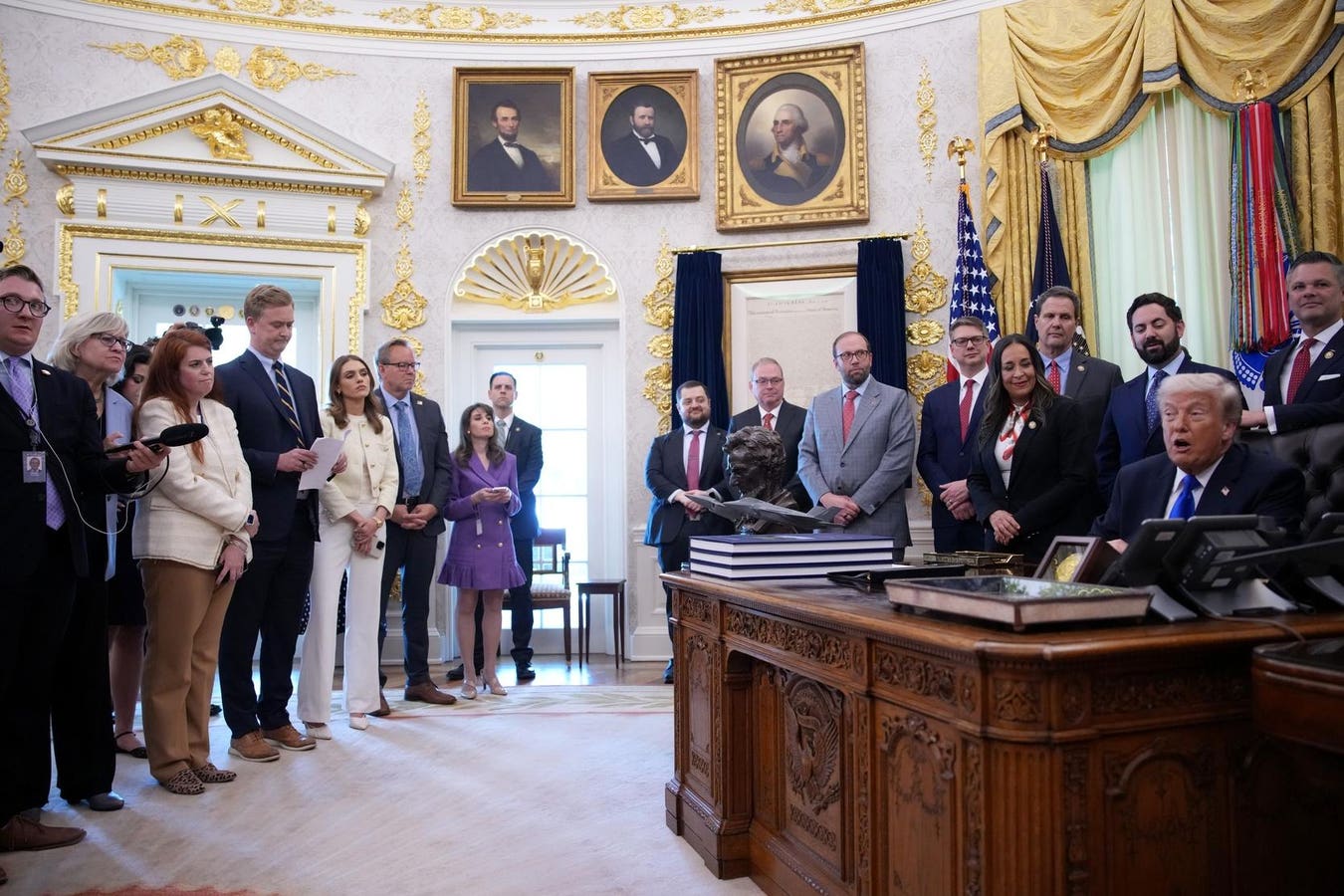
Senator Ted Cruz recently dropped what he called a “dirty little secret” about Trump accounts at the Milken Institute Global Conference: “Conservatives in America, for 50 years… have been trying to do Social Security personal accounts. Here’s the dirty little secret: Trump Accounts are Social Security personal accounts.” Treasury Secretary Scott Bessent similarly described Trump accounts as “a back door for privatizing Social Security” before quickly walking it back.
Both Republicans are wrong. I have spent decades studying retirement security and I explain why. The Trump accounts are not privatization. The distinction matters enormously, and getting it right matters for whether progressives engage constructively with a genuine opportunity or spend political capital fighting the wrong battle.
Bush Subtracted. Trump Adds.
Twenty years ago, President George W. Bush made Social Security privatization the centerpiece of his second-term domestic agenda. His proposal was a subtraction: workers would divert up to 4 percent of their payroll taxes—money that flows directly into Social Security—into private investment accounts. Diverting that revenue would have drained the very funds that pay current and future benefits. Democrats were united in opposition, and they were right. Bush’s 60-stop road show collapsed under public resistance by summer 2005. It was a democratic victory worth remembering.
Trump accounts are structured differently. They are an addition: federal seed money deposited into tax-deferred investment accounts that sit alongside Social Security, not in place of it. The $1,000 per baby born between 2025 and 2028 comes from new federal funding—no payroll tax is diverted, no benefit is cut. When Bessent corrected himself, he said the accounts would “supplement the sanctity of Social Security’s guaranteed payments.”
That is exactly right. The Trump accounts are supplements to Social Security.
Cruz’s vision of using Trump accounts as a political gateway to future privatization is a real concern—one worth watching. But a policy should be judged by what it does, not by what an ambitious senator hopes it might someday lead to. As reported by Emily Peck in Axios, Cruz’s remarks circulated behind closed doors on Capitol Hill before he said them publicly – but no Republican has yet proposed a payroll tax carve-out. Watch what they do, not what Cruz hints at.
A Century of Workers Demanding Both Pillars
American workers have never wanted a one-pillar retirement system. For the past century, they have fought for two things at once: a strong Social Security foundation and workplace accounts to build on top of it. From steelworkers to autoworkers to teachers, organized labor understood that Social Security was necessary but not sufficient. A dignified retirement required a supplement.
The world’s best retirement systems—the Netherlands, Denmark, Iceland—all combine the pay-as-you-go solidarity of Social Security with advance-funded employer-sponsored savings, as documented in the Mercer CFA Institute Global Pension Index and analyzed by economists Barr and Diamond. The hybrid architecture is hard-won wisdom: pay-as-you-go systems provide guarantees against market crashes and longevity risk; advance-funded systems build capital that compounds over a lifetime of work. Together they are more resilient than either alone.
As Madland and Weller at the Center for American Progress document, unions historically won mostly defined benefit plans, but they also bargained for 401(k)s. The fundamental point is that workers want supplements to Social Security, and when workers have power, they get them. Research by Ghilarducci, Forden, and Phillips finds that being in a union at some point in one’s career is associated with a 646 percent increase in retirement wealth, largely because union coverage means access to defined benefit plans.
The Minimum Wage for Wealth
Trump accounts do for workers what the minimum wage does for wages. When workers lack bargaining power, the government steps in. The minimum wage is a substitute for collectively bargained wages; government regulation provides what the market won’t. Trump accounts are the minimum wage for wealth acquisition—a floor, not an achievement. In that sense, they are a victory for the logic unions have always advanced.
The scale of the problem makes this floor urgently necessary: 69 million American workers today have no workplace retirement plan at all. The Trump accounts, even at a modest $1,000, acknowledge a principle that progressive retirement policy has long championed: every American worker and every American child should have a funded account.
The RSAA: Completing the Architecture
The Retirement Savings for Americans Act (RSAA) is the legislation that completes what the Trump accounts begin—as I describe in detail in my Forbes piece, “A Retirement Fix For 60 Million American Workers: Australia Inspired” ). Where Trump accounts seed investment for the young, the RSAA ensures universal coverage for the entire workforce—the about 60 million workers who today have no employer-sponsored retirement plan. It restructures federal retirement tax incentives as refundable credits that deliver maximum benefit to workers who need them most, rather than the current system that directs 70 cents of every federal retirement subsidy to the top income quintile. And crucially, the RSAA strengthens Social Security itself, reaffirming its pay-as-you-go foundation while building an advance-funded complement on top of it.
The Trump Accounts Are Not Privatization
The trauma of 2005 was real. Workers’ groups, retiree organizations, and Democratic lawmakers spent months fighting a proposal that would have dismantled the most successful anti-poverty program in American history. They won. The lesson of that victory should not be that any new savings account is a threat to Social Security. The lesson is that the line between additive and subtractive matters—and that every American deserves both a guaranteed foundation and a funded supplement.
American workers have always known this. They fought for Social Security in the 1930s and for pensions through every decade since. The Trump accounts are an imperfect, inequitable, but conceptually valid step toward the hybrid system unions have demanded for a century. The RSAA is the path to making that system universal, equitable, and permanent. As Peter Coy writes: “You never know with these bipartisan projects: They can be loved by both sides or hated by both sides. In this case, it seems more like love.”
Read the full article here