





Oil futures touched their lowest intraday level in four weeks on Wednesday after U.S. government data revealed a smaller than-than-expected weekly decline in domestic crude supplies and a more than 6 million-barrel climb in gasoline stockpiles.
Prices sharpened their losses after early weakness that followed news that Saudi Arabia, as expected, affirmed its plan to extend a production cut of 1 million barrels a day through year-end.
Price action
-
West Texas Intermediate crude
CL00,
-5.41%
for November delivery
CL.1,
-5.41% CLX23,
-5.41%
fell $2.85, or 3.2%, to $86.38 a barrel on the New York Mercantile Exchange. The contract traded as low as $85.95, the lowest since Sept. 6, FactSet data show. -
December Brent crude
BRN00,
-5.41% BRNZ23,
-5.41% ,
the global benchmark, dropped $3.24, or 3.6%, to $87.68 a barrel on ICE Futures Europe, with front-month prices trading as low as $87.67, the lowest since Sept. 1. -
November gasoline
RBX23,
-6.75%
fell 4.7% to $2.2486 a gallon, trading at the lowest since January, while November heating oil
HOX23,
-5.06%
dropped 3.8% to $3.0729 a gallon. -
November natural gas
NGX23,
+1.29%
traded at $3.051 per million British thermal units, up 3.5%.
OPEC+ plan stays in place
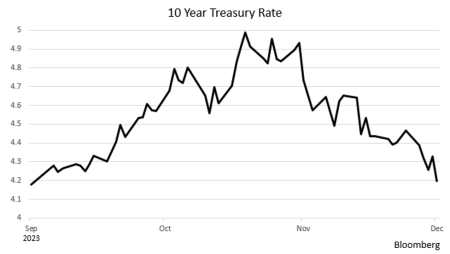
Crude oil prices have pulled back from 2023 highs set last week, with analysts citing profit-taking amid rising worries over the economic outlook as Treasury yields jumped to highs not seen since before the 2008 financial crisis.
But crude is expected to remain underpinned by concerns over tight supplies. The production cut by Saudi Arabia, first implemented in July and subsequently extended, has been cited as a key driver of the oil rally.
The Saudi Energy Ministry reaffirmed Wednesday, as had been mostly expected, that the cuts would continue through the end of the year in a brief statement posted on its website Wednesday attributed to “an official source.” It said the kingdom would continue to produce 9 million barrels a day in November and December.
Members of the Organization of the Petroleum Exporting Countries and their allies on Wednesday, at a meeting of the Joint Ministerial Monitoring Committee, expressed their “full recognition and support,” as well as appreciation, for Saudi Arabia’s efforts at supporting the stability of the oil market. They also acknowledged Russia for extending its own additional voluntary output reduction.
When the committee meeting started, sources leaked that no policy discussions were on the agenda, Stephen Innes, managing partner at SPI Asset Management, told MarketWatch. “Oil markets didn’t like that, as there were some expectations for Saudi Arabia to float the idea of pushing current cuts into 2024.”
At the same time, “increasing chatter about more non-OPEC supply coming to market is not working in the bull market’s favor this week,” he said.
Supply data
On Wednesday, the Energy Information Administration reported that U.S. commercial crude inventories fell by 2.2 million barrels for the week ended Sept. 29.
On average, analysts polled by S&P Global Commodity Insights expected the report to show a decrease of 1.4 million barrels. The American Petroleum Institute late Tuesday reported that U.S. crude inventories fell by 4.2 million barrels last week, according to a source citing the data,
“Seasonal refinery maintenance is in full swing, materially reducing crude demand, but strong exports have combined with weaker imports to draw crude inventories, albeit modestly,” said Matt Smith, lead oil analyst, Americas, at Kpler.
The EIA report also revealed a supply climb of 6.5 million barrels for gasoline, while distillate stockpiles edged down by 1.3 million barrels. Analysts surveyed by S&P Global Commodity Insights expected gasoline stockpiles to stand unchanged for the week, while distillate supplies were forecast to fall by 1.6 million barrels.
“We are hitting the peak of seasonal refinery maintenance, yet gasoline inventories built strongly amid much weaker implied demand,” said Smith. Still, “distillates showed a modest draw, a seasonally typical trend amid strong agricultural demand and pre-winter residential stockpiling of heating oil.”
Crude stocks at the Cushing, Okla., Nymex delivery hub rose by 100,000 barrels for the week, the EIA said.
Read the full article here