






Unusual trading activity in the options market may help explain the rally in U.S. stocks that has taken place since last Friday, analysts say.
The composite put-call ratio, which compares volume in bearish options to volume in bullish options for all equity options trading on the U.S.’s 16 options exchanges, surged to its highest level in more than nine months last week.
On Oct. 4, the composite put-call ratio logged a closing level of 1.332, according to Bloomberg data. That was the highest level since a 1.667 reading on Dec. 28, 2022.
A rising put-call ratio typically reflects heavy demand for put options, which protect investors from a decline in a given stock, index or exchange-traded fund, relative to call options, which pay off when the price of the underlying rises. The average composite put-call ratio going back to the beginning of 2017 is roughly 0.83.
The put-call ratio didn’t remain elevated for long though. Within a few days, the ratio had jerked lower as traders loaded up on calls amid a rally in stocks that began shortly after the release of the September jobs report on Friday.
By Wednesday, the put-call ratio had slipped back to 0.792. If it ends the day on Wednesday at this level, it would mark the lowest end-of-day ratio since July 31, when the ratio dropped to 0.747. During that same session, the S&P 500
SPX
logged its highest closing level of the year, finishing at 4,588.96, according to FactSet data.
The unusual pattern caught the attention of stock-market analysts, who believe positioning in options likely explains the rapid turnaround in U.S. stocks over the past week.
The put-call ratio is widely seen on Wall Street as a counter-indicator, meaning extremely high or low readings often correspond with near-term market tops or bottoms. In this case, it worked as the low reading on July 31 corresponded with a near-term market top.
Between Aug. 1 and Friday, the S&P 500 shed 5.9%, trimming more than one-third of its year-to-date gain on a points basis, according to FactSet data.
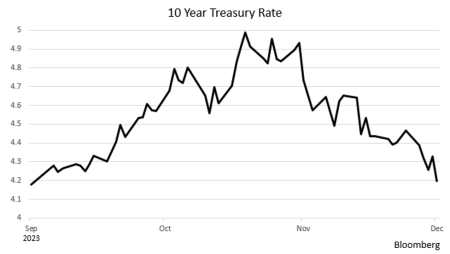
Investors have blamed disparate factors for the turnaround in stocks over the past week. Some say the September jobs data support the case for a soft landing for the U.S. economy. Others have credited a shift in Federal Reserve officials’ rhetoric that may have helped tamp down Treasury yields and help out stocks. One prominent Wall Street strategist even said the terror attack in Israel over the weekend may have boosted appetite for stocks.
But Steve Sosnick, chief strategist at Interactive Brokers, has an even more straightforward explanation.
“Everybody rushed from one side of the boat to the other,” Sosnick said during an interview with MarketWatch. “Friday was a powerful rally, and it has been continuing ever since.”
The Nasdaq Composite
COMP
was headed for a fourth day in the green on Wednesday, with the index up 0.4% in mid-afternoon trade. Meanwhile, the S&P 500 was on track to rise for the fourth session in five, up 0.2% in recent trade. Friday’s rally helped the S&P 500 dodge a fourth straight week in the red, and the index is on track to rise for a second straight week.
Read the full article here